Hey there, crypto enthusiasts! Today, we're diving into the whirlwind that is the Bitcoin market. Buckle up as we explore the recent 9% crash in Bitcoin's price to $69,000, sending shockwaves through the financial world. Let's uncover the reasons behind this massive dip and what it means for investors like you.
The Global Ripple Effect on Bitcoin
The Rollercoaster Ride of Bitcoin Prices
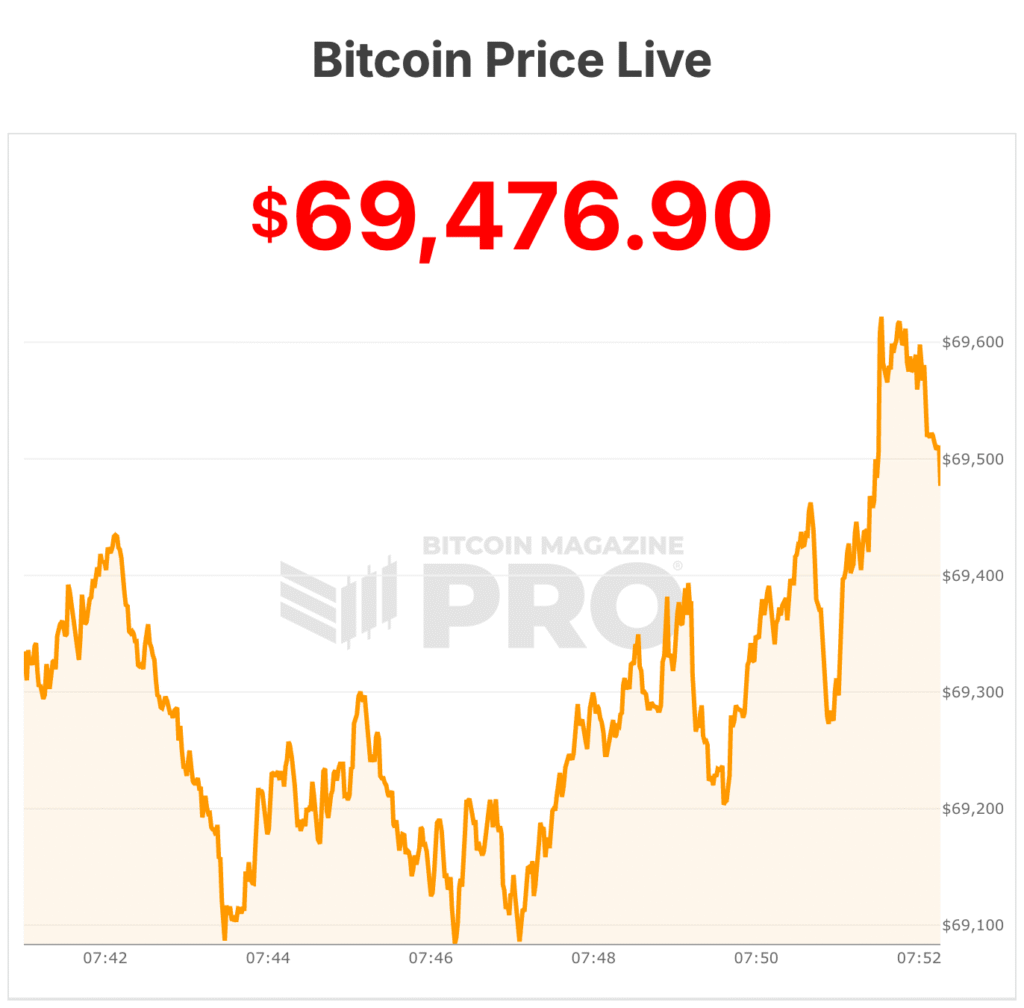
Picture this: Bitcoin's value plummeted by 9% to $69,000 during Asian trading, mirroring the downward trend in global markets. This drop erased all gains since its previous all-time high, leaving many investors on edge.

Tech Turmoil: The Impact on Bitcoin
The AI Investment Boom and Its Fallout
Just like a domino effect, Bitcoin's fall was intertwined with plunging Asian equities, especially in the tech sector. The concerns around AI stocks and their inflated values added fuel to the fire, triggering a broader sell-off.
Institutional Insights and Investor Sentiment
The ETF Exodus and Corporate Strategies
As institutional demand waned, Bitcoin ETFs saw significant outflows, signaling a shift in market sentiment. The spotlight now shines on Strategy and its massive Bitcoin holdings, with investors eagerly awaiting its next move amid the market turmoil.
Mining Mayhem and Regulatory Realities
The Hashrate Headache and Government Stance
Behind the scenes, the mining sector faces challenges as Bitcoin's price struggles to cover production costs. Meanwhile, regulators like Treasury Secretary Scott Bessent made it clear that the government won't step in to rescue Bitcoin, underlining the decentralized nature of cryptocurrencies.
As we navigate these turbulent waters, remember that the crypto market is a rollercoaster of highs and lows. Stay informed, stay cautious, and most importantly, stay resilient in the face of market volatility. Now, it's your turn – how will you navigate the Bitcoin storm?
Frequently Asked Questions
Which type of IRA could be used for precious metals
Employers and financial institutions often offer Individual Retirement Accounts (IRA) as an investment vehicle. A IRA is a way to make money and allow it to grow tax-deferred, until you withdraw it.
An IRA lets you save taxes and pay them off later. This allows you to save more money today and pay less taxes tomorrow.
An IRA is a tax-free way to make contributions and earn income until you withdraw the funds. If you do withdraw the funds earlier than that, you will be subject to penalties.
You can also contribute to your IRA beyond age 50 without penalty. If you choose to take withdrawals from your IRA during retirement, you’ll owe income taxes and a 10% federal penalty.
Withdrawals made before age 59 1/2 are subject to a 5% IRS penalty. A 3.4% IRS penalty is applicable to withdrawals made between the ages of 59 1/2 and 701/2.
A 6.2% IRS penalty applies to withdrawals exceeding $10,000 per annum.
How do you choose an IRA.
Understanding your account type is the first step to finding the best IRA. This will include whether you’re looking for a Roth IRA or a traditional IRA. You also want to know how much money you have available to invest.
Next is deciding which provider best suits your needs. Some providers offer both accounts, while others specialize in just one type.
You should also consider the fees associated each option. There may be annual maintenance fees, as well as other fees. Fees for each provider can vary widely. For example, some providers charge a monthly fee based on the number of shares you own. Others may only charge one quarter.
Do you need to open a Precious Metal IRA
This will depend on whether or not you have an investment objective and what level of risk you are willing to accept.
You should start an account if you intend to retire with the money.
Because precious metals are highly likely to appreciate over time, You also get diversification benefits.
Additionally, silver and gold prices tend to move in tandem. This makes them a better choice when investing in both assets.
You should not invest in precious-metal IRAs if it is not your intention to use your money for retirement, or if you are unwilling to take any risks.
Statistics
- To qualify as IRA allowable precious metals and be accepted by STRATA, the following minimum fineness requirements must be met: Gold must be 99.5% pure, silver must be 99.9% pure, and platinum and palladium must both be 99.95% pure. (stratatrust.com)
- The IRS also allows American Eagle coins, even though they do not meet gold’s 99.5% purity standard. (forbes.com)
- You can only purchase gold bars of at least 99.5% purity. (forbes.com)
- SEP-IRA”Simplified employee pension” For self-employed people like independent contractors, freelancers, and small-business ownersSame tax rules as traditional IRASEP IRA contributions in 2022 are limited to 25% of compensation or $66,000, whichever is less4. (sltrib.com)
External Links
kitco.com
wsj.com
investopedia.com
forbes.com
- Gold IRA: Add Some Sparkle To Your Retirement Nest Egg
- Understanding China’s Evergrande Crisis – Forbes Advisor
How To
Precious Metals Approved By the IRA
IRA-approved precious materials are excellent investments whether you’re looking for ways to save money for retirement or to invest in your next business venture. You have many options to diversify your portfolio, protect yourself against inflation, and from silver coins to gold bars, there are many.
There are two types of precious metal investment products. Because they are tangible, physical bullion products like bars and coins can be considered assets. However, exchange-traded fund (ETFs), which are financial instruments, track the price movement of an underlying assets, such as gold, and can be purchased directly from the company issuing them. ETFs trade like stocks on stock exchanges, which means investors can buy shares of them directly from the company issuing them.
There are various types of precious metals available for purchase. While gold and silver are used in jewelry making and decoration, platinum and palladium are most commonly associated with luxury products. Palladium tends be more valuable than platinum which makes them ideal for industrial use. While silver can be used for industrial purposes, it is more commonly preferred for decorative purposes.
Due to the expense of mining and refining natural materials, physical bullion is more expensive. But they are generally safer than traditional paper currencies and provide buyers with more security. One example is that consumers could lose trust in the currency, and may look for other currencies if the U.S. Dollar loses its purchasing power. Physical bullion products on the other side do not depend upon trust between countries and companies. They are instead backed by central banks and governments, which gives customers security.
The supply and demand for gold affect the price of gold. Demand rises, and the price goes up. On the other hand, supply falls when demand exceeds demand. This dynamic creates opportunities for investors to profit from fluctuations in the price of gold. Physical bullion investors benefit because they have a greater return on their capital.
Precious metals can’t be affected by economic recessions. As long as the demand for gold remains strong, it will continue to rise. In times of uncertainty, precious metals can be considered safe havens.
The most sought-after precious metals are:
- Gold – Gold is the oldest precious metal. Gold is also called “yellow-metal”. Gold is a common name, but it’s a rare element that can be found underground. The majority of the world’s reserves of gold are located in South Africa, Australia and Peru.
- Silver – Silver is second most valuable precious metal, after gold. Silver is also mined from natural resources, just like gold. Silver is extracted from ore, not rock formations, unlike gold. Silver is widely used in both industry and commerce due to its durability, conductivity and resistance against tarnishing. The United States is responsible for 98% worldwide silver production.
- Platinum – Platinum is the third-most valuable precious metal. It can be used to make high-end medical equipment, fuel cells, and catalytic converters. Platinum is also used in dentistry to make dental crowns, fillings, and bridges.
- Palladium- Palladium, the fourth most precious precious metal, is Palladium. Because of its strength as well as stability, its popularity is increasing rapidly among manufacturers. You can also use palladium in electronics, automotives, and military technology.
- Rhodium – Rhodium has been ranked fifth among precious metals. Rhodium is an extremely rare metal. However, its use for automotive catalysts makes it highly desirable.
- Ruthenium: Ruthenium is sixth most valuable precious metallic. While palladium and platinum are scarce, ruthenium has a large supply. It is used in steelmaking, chemical manufacturing, and engine design.
- Iridium – Iridium is the seventh most valuable precious metal. Iridium has a significant role in satellite technology. It is used in the construction of orbiting satellites that transmit TV signals and telephone calls.
- Osmium- Osmium ranks eighth in the list of most valuable precious metals. Because of its extreme temperature resistance, Osmium is often used in nuclear reactors. Osmium is also used to make jewelry, medicine, and cutting tools.
- Rhenium- Rhenium, the ninth most precious precious metal, is Rhenium. Rhenium is used for refining oil, gas, semiconductors, rocketry, and other purposes.
- Iodine – Iodine is the tenth-most valuable precious metal. Iodine has been used in radiography, pharmaceuticals, and photography.
—————————————————————————————————————————————————————————————-
By: Micah Zimmerman
Title: The Bitcoin Market Rollercoaster: Understanding the $69,000 Price Plunge
Sourced From: bitcoinmagazine.com/markets/bitcoin-price-crashes-to-69000
Published Date: Thu, 05 Feb 2026 13:04:54 +0000